Romitha: A Brush Handwritten Font That Elevates Your Brand
Two weeks ago, I held a freshly printed batch of candle labels in my hands—soft kraft paper, minimalist layout, and that same clean sans serif font I’d used for three years. It looked fine. But “fine” wasn’t what I wanted anymore. My small-batch soy candles were gaining local love at farmers’ markets and indie boutiques, yet something felt off: the typography didn’t reflect the warmth, care, or handmade soul behind every pour. That’s when I discovered Romitha—a Script Handwritten font with genuine brush energy—and everything shifted.
Romitha for Product Packaging That Feels Thoughtfully Made
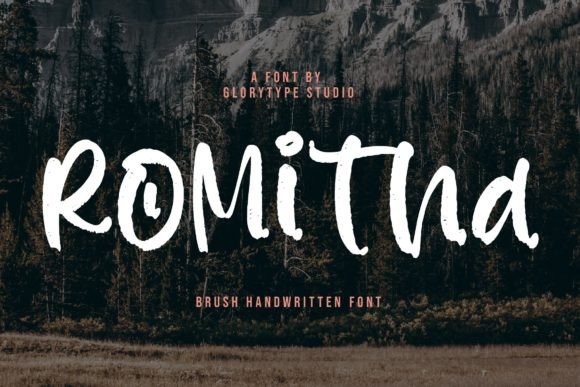
Romitha isn’t just another handwritten font—it’s got the slight texture, natural taper, and organic flow of real ink on paper. When I swapped it in for my candle jar labels, the change was immediate: the word “Lavender & Sage” suddenly looked like it belonged beside a hand-poured vessel, not a generic stock design. As a Fonts user who prints physical packaging, I appreciated how Romitha holds up beautifully at 12–16pt on matte stickers and kraft boxes. No pixelation. No stiffness. Just warmth you can almost smell. It works especially well for short, evocative names—like “Hearth,” “Drift,” or “Juniper”—and pairs effortlessly with a light sans serif (think Montserrat Light or Inter) for ingredients or origin details.
Romitha for Mugs, T-Shirts, and Homeware Designs With Personality
Last month, I added ceramic mugs to my shop—simple white stoneware with one phrase per side: “Brew Slow,” “Good Morning, Again,” “This Mug Loves You.” Before Romitha, those phrases felt flat. With Romitha, they gained rhythm and breath. Because it’s a Script Handwritten typeface built for display—not body text—it shines brightest on products where legibility meets charm. On mugs? Perfect at 24–36pt. On T-shirts? Crisp even when screen-printed at medium scale. For homeware designs—think tea towels, coasters, or framed quotes—Romitha adds that handmade authenticity customers associate with craft, care, and consistency.
Romitha for Book Covers and Name-Based Branding That Stands Out
I helped a friend launch her debut poetry chapbook last season—and we both agreed: the cover needed to feel intimate, not polished to perfection. Romitha became the quiet hero. Its gentle contrast and subtle flourishes gave her name and title (“Clara Vale | Where Light Rests”) a personal, literary tone—like a signature tucked into the corner of a letter. As a Fonts choice for book covers and name-based branding, Romitha avoids looking trendy or dated. It’s timeless enough for memoirs, cozy romance novels, or even children’s activity books—but always feels intentional. Just remember: keep it for titles, author names, and decorative accents—not dense paragraphs.
Romitha for Shopping Bags, Posters, and Branded Merch That Builds Recognition
Our café pop-up last fall used custom shopping bags with our logo and tagline. We’d used a free script font before—and while it worked, it lacked distinction. Switching to Romitha meant our bags now carried visual weight: the brush stroke in the “o” of “Brew,” the soft lift in the “y” of “Daily”—tiny details that made people pause, smile, and snap photos. That’s the power of a considered Script Handwritten font. Whether it’s a 24x36” poster for your boutique window, a tote bag for an online shop launch, or a limited-run sticker sheet, Romitha helps your Fonts choices do double duty: communicate mood *and* build brand memory.
Romitha for Logos and Branding Projects That Feel Human-Centered
Let’s be honest: logos need to work everywhere—from Instagram bios to embroidered patches. So when I redesigned my brandmark, I tested Romitha alongside five other scripts. What set it apart? Versatility without compromise. Its lowercase “r” and “a” have just enough character to feel unique, but its spacing and proportions stay balanced—even at tiny sizes. As a Script Handwritten font, Romitha isn’t overly ornate, so it scales cleanly across digital and print. I use it for our primary wordmark, then pair it with a warm, airy sans serif (like Poppins or Nunito) for subheadings and web copy. The result? A branding project that feels cohesive, approachable, and quietly confident.
Romitha for Quotes, Social Media Graphics, and Digital Ads That Stop Scrolling
In a feed full of bold sans serifs and AI-generated visuals, Romitha stands out by being gently human. I use it for quote graphics on Instagram Stories—“Slow down. Breathe. Begin again.”—and it consistently gets more saves and shares than our previous templates. Why? Because Script Handwritten fonts like Romitha trigger emotional recognition: they signal sincerity, creativity, and care. On mobile screens, it remains highly readable at 28–40pt (ideal for Stories and Reels text overlays), and its natural rhythm guides the eye without competing with imagery. For digital ads or Pinterest pins, Romitha adds personality without sacrificing clarity—especially when layered over soft textures or muted backgrounds.
Before You Use Romitha: Quick Licensing & File Notes
All Fonts are only as useful as their license allows—so I double-checked Romitha’s commercial terms before printing anything. Good news: it’s cleared for unlimited personal *and* commercial use—including merchandise, packaging, client work, and digital templates. It comes in OTF and TTF formats, includes standard ligatures and stylistic alternates (super helpful for avoiding repeated letter combos), and supports multilingual Latin-based languages. No hidden fees. No usage limits. Just a thoughtful, ready-to-deploy Script Handwritten tool that fits right into real business workflows.
If your brand feels a little too generic—or if you’re tired of scrolling through fonts that look like everyone else’s—I get it. Choosing Romitha wasn’t about chasing trends. It was about finding a Script Handwritten voice that matched how I actually make things: slowly, carefully, and with heart. And now? Every label, mug, bag, and banner feels like a truer version of what we stand for.